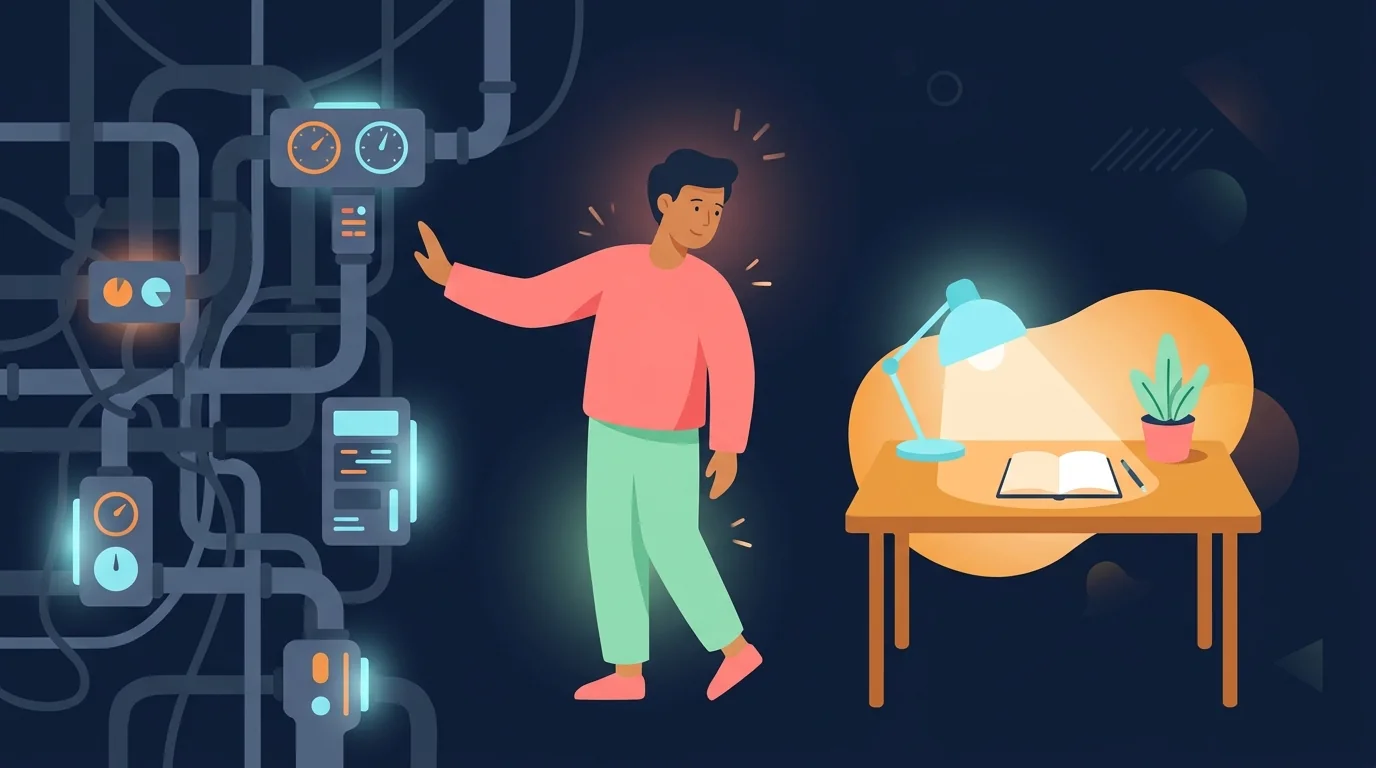
You linked your bank to an automated budgeting app, watched 3 years of transactions pour in, and felt properly organized for the first time in ages. The charts looked good and the categories mostly worked. Then 6 months went by and your spending was the same as before. Maybe a little worse.
Nothing about that is your fault. These apps are built on one promise: "Connect your accounts and never think about money again." They keep it. The trouble is that thinking about money, for a couple of seconds at a time, was the part that was working.
This article explains what the sync takes away without telling you, and what to do instead. The alternative costs about 2 minutes a day.
Awareness was the active ingredient
Ask anyone who genuinely turned their finances around, whether they used a spreadsheet, a notebook, or cash in envelopes, what actually did it. They almost never credit the tool. They credit one moment: "I finally saw where it was going."
Seeing was the thing that worked. Every budgeting method that has ever worked, from paper ledgers to the apps everyone was using a few years ago, worked by making you sit down with what you actually spent. The method was just the packaging around that.
Automation removes exactly that. The app sees your transactions so you don't have to. Your spending turns into a report you check now and then, the way you'd glance at someone else's accounts.
An automated feed of your spending is a security camera, not a mirror. It records everything and changes nothing.
What the sync replaces, and what that costs
When a bank-linked app imports "MERIDIAN FOODS 482.19," nothing happens in your head. You didn't pause, you didn't take in the amount, and nothing asked you to.
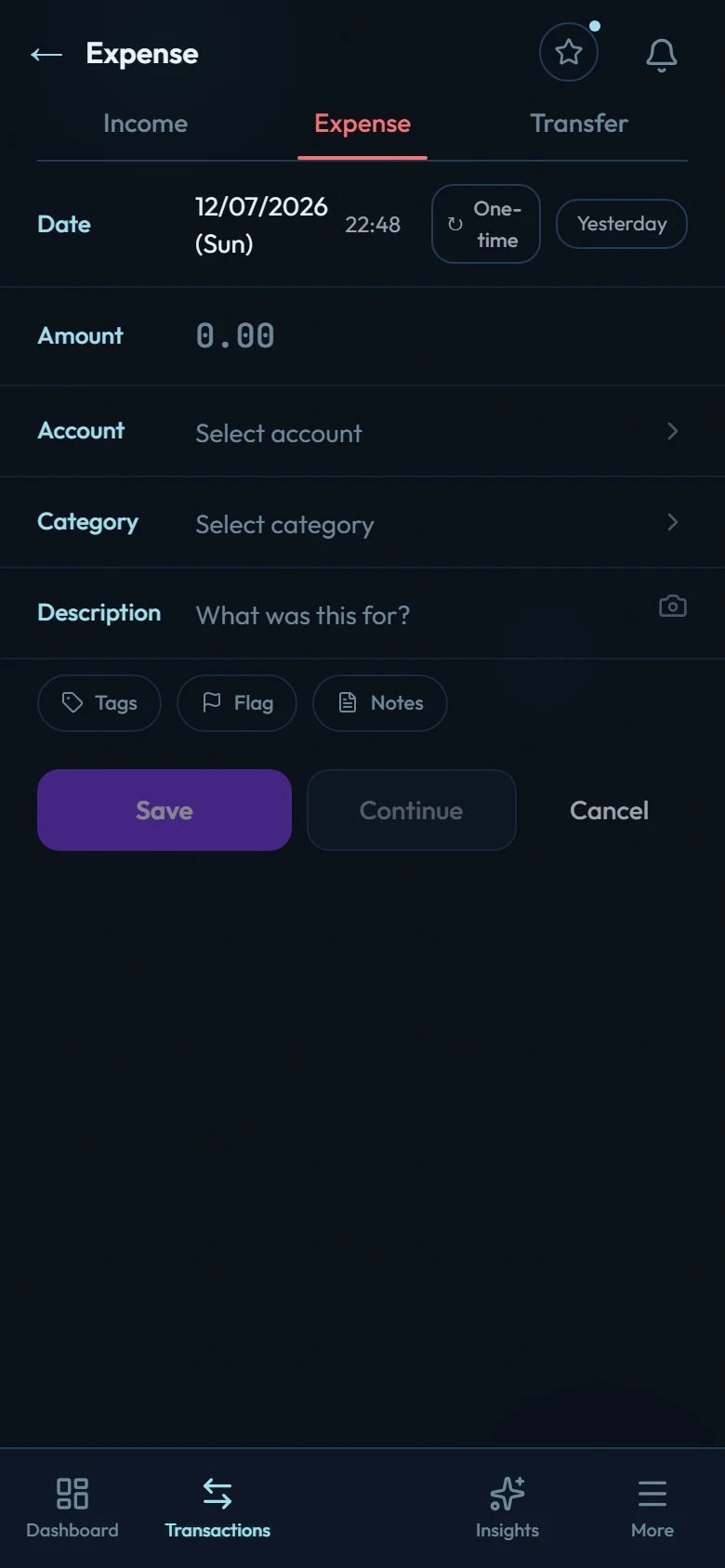
When you record the same purchase yourself (5 seconds, amount and a category), something small but real happens. The purchase passes through your attention once. You actually see it. Do that daily and you build a real sense of where your money goes. No chart can give you that from outside.
Researchers call this self-monitoring, which just means keeping your own record of something you do. It's one of the most reliable findings in habit research: write something down and you start doing it differently, with nothing else added. Food diaries change eating. Training logs change training. Written spending changes spending. Remove the recording and you remove the effect. Automated apps take the recording away on purpose. It's the selling point. We went into it properly here: The Science of Writing Down What You Spend.
The 40-transaction wall
There's a specific moment every automated-app user knows. You finally open the app after a couple of weeks and meet the wall: 40, 60, 90 imported transactions. Some are duplicates. Some are pending. Some say things like "POS 7726 XR." A few you genuinely cannot remember.
Reviewing the wall feels like an audit of a stranger who happens to have your card. So you skim, fix two categories, feel vaguely bad, and close the app. Do that a few times and the app ends up unopened on your third home screen.
Compare that with the manual version: you record today's 3 purchases today, while you still remember them. 10 seconds each. There's no wall, because you can't fall 3 weeks behind without seeing it happen.
That manual version is the heart of Wealth Mutant, a personal finance app. You type in what you spend, in a few seconds, and the app does the categories, the budgets and the totals around it. There's no bank linking to set up or repair, and you pay for it once.
Ready to take control?
See your budgets, cards, loans and net worth in one place. One payment, yours for life.
Buy — $99 once"But I don't have time to track manually"
The math says otherwise. 3 or 4 purchases a day at under 30 seconds each is about 2 minutes. You'll spend longer than that fixing the app's category guesses, clearing duplicate imports, and logging in again when the bank connection breaks. Manual tracking costs the same time, spent where it works.
And the sync connection itself is worth a hard look before you hand it over. That "read-only access" runs through a middleman company, a data aggregator, with its own rules about what it keeps. What actually happens to your transaction history after that deserves its own article, and it has one: What Bank-Linking Apps Actually Do with Your Data.
What automation is actually good for
To be fair, some automation genuinely helps. Not every payment involves a decision worth thinking about.
- Scheduled, identical, agreed in advance: rent, salary, subscriptions. You learn nothing from typing your rent in for the 40th time. Rules should handle those.
- Sums and totals: budgets adding themselves up, categories totaling, net worth (what you own minus what you owe) staying current. That was never the part that changed anything.
- Catch-up after life happens: a statement upload that finds only what you missed, so a busy couple of weeks doesn't cost you the habit.
The line is simple: let the app handle payments you already decided on, and keep typing the ones you're still deciding. Rent is the first kind. Whatever you buy on the way home tonight is the second.
A fairer scorecard
Do
- Judge an app by whether you know your own spending better after 3 months.
- Automate the predictable: salary, rent, subscriptions, the math.
- Keep the two-second recording moment for the purchases you're actually choosing.
Don't
- Judge an app by how little it asks of you — that's the weakness, sold as the main feature.
- Confuse beautiful charts of unexamined data with progress.
- Hand your bank login to a middleman company to save 2 minutes a day.
What people are doing instead
Plenty of people are going back to notebooks, spreadsheets and apps you type into yourself, for the same reason you may be reading this: years of automated tracking produced a lot of data and no change.
We built Wealth Mutant on that conclusion: in this personal finance app, you record what you spend in a few seconds, and every chart and budget comes from what you put in yourself. Nothing in it links to a bank, which is the whole idea. See how it works, or just start tonight — 5 minutes in the evening, everything you remember buying today, and see what two weeks of it does.