
A few of us lost an evening to one of those videos where people confess their worst financial decisions. A man who, at his peak, was spending 5,000 a month on delivery apps. Someone who asked a delivery app's support team for their lifetime total and got back a figure just under 100,000. A 19-year-old paying 1,100 a month for a compact hybrid car once full insurance and an extended warranty were stacked on top. A couple who bought a business with two personal loans and found out afterwards that it only broke even.
We understand why the genre does so well. You feel relief, because at least it isn't you. And underneath the relief there is a colder question, because you cannot say for certain what your own version of that figure is.
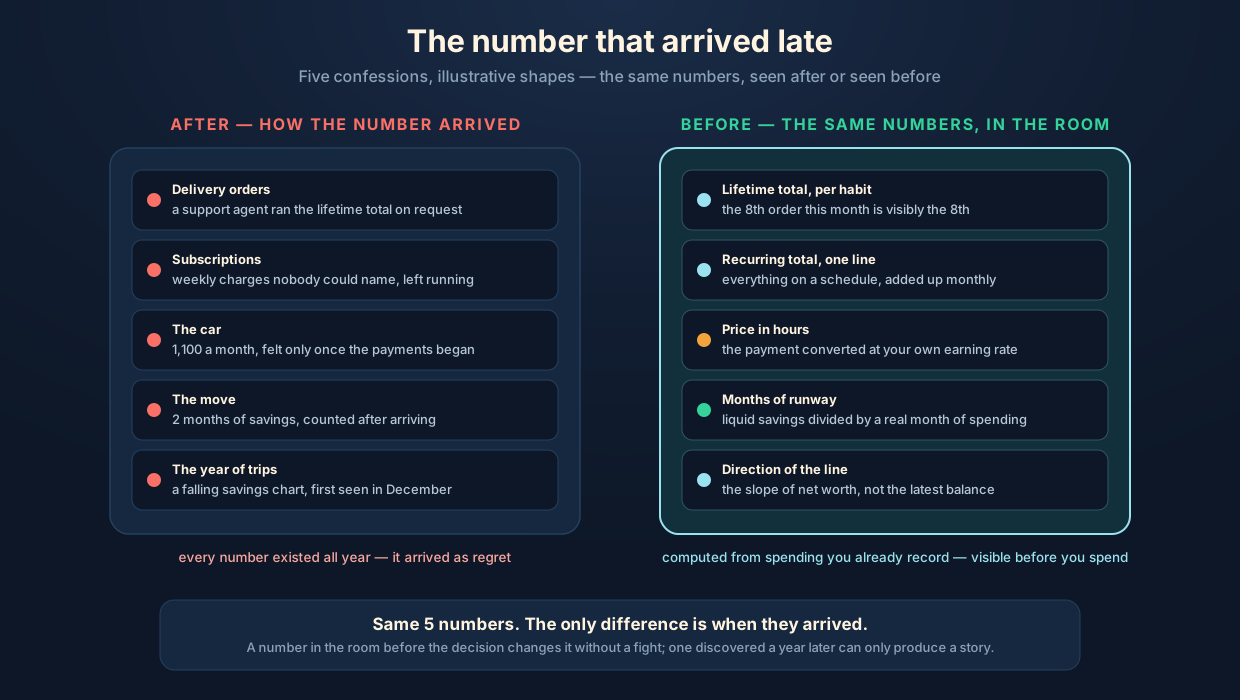
What kept us rewinding was something else. The video presents these as failures of discipline, and by the 4th or 5th story we had stopped believing that. In almost every one, the deciding number existed the whole time. It sat in a bank statement, a billing history, a trend nobody had drawn. What it never did was arrive at the moment the decision was being made. The money went out first. The number came later, as regret.
What the biggest money mistakes have in common
Set the details aside and the same sequence repeats. One modest choice gets made many times. Nothing about any single instance looks like a mistake. The total builds up somewhere the person never looks, and then one day it surfaces, usually because someone else pulled it: a support agent, a year-end chart, a spouse, a repossession notice.
The reaction is the tell, and it is what convinced us. Nobody in that video says I knew and did it anyway. They all say some version of I had no idea it was that much. That sentence is not a confession of weakness. It is a report of missing information.
Five numbers missing from every money mistake
We went back through the video and wrote down which number would have had to be visible, and when. Five of them covered nearly every story.
The lifetime total
Delivery orders arrive one at a time, and each one is defensible. A long day, a rainy evening, nothing in the fridge. What no single order reveals is that the 22nd one this month is the 22nd one this month. The man spending 5,000 a month did not experience it as 5,000. He experienced it as dinner, roughly 60 times.
The person who wrote to support got their total because they asked a human to run a query. The number was there the entire time; the app that took the money simply never volunteered it. The same shape shows up in the clip about the mobile game where in-game purchases came to 2,200, and in the comment from someone whose therapist pointed out that this was, in practice, gambling. Frequent, unremarkable and never added up is the exact pattern the eye cannot catch on its own.
A running total per shop or per category, over any window you choose, is the whole fix. Not a limit, not a lecture. A number that updates every time you record the order, so that the 8th one this month is visibly the 8th.
The recurring total
One confession is almost a throwaway, and it was the one we recognised most. A tech company takes 18 and change from an account every week, another charge for 12, another for 17, and the person cannot say what any of them buys. The comments underneath were full of people saying "same".
The individual amounts are minor enough to escape notice indefinitely. Behavioural researchers call this the ostrich effect: the tendency to avoid information that might hurt, especially when each piece of it looks harmless. What would not escape notice is that weekly figure multiplied out to a year and printed next to the word subscriptions. Recurring money is the easiest money in your life to see, because it announces its own schedule. It is also, for most people, the least seen, because no single line is large enough to demand a look.
The fix is one figure: everything that recurs, added up, on one line.
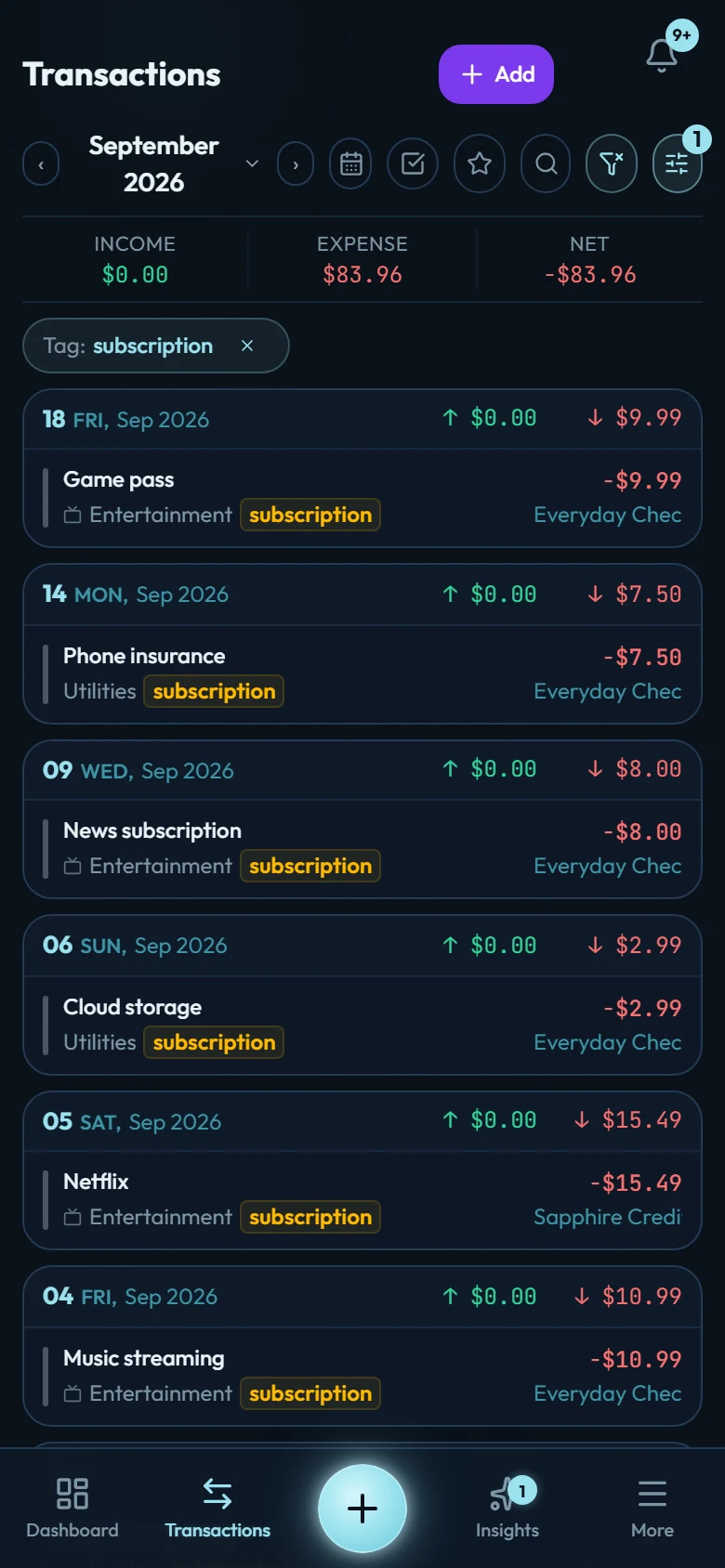
We wrote a whole article on this one, because it turned out to be the most common of the 5: Subscription Fatigue.
The price in hours
The 19-year-old with the 1,100-a-month car is not stupid, and we want to be careful here, because the internet was not kind to him. He is working two jobs, he can make the payment, and each add-on made sense in the dealership. Full cover because he is young, the extended warranty because breakdowns are scary. Everything he said was reasonable.
What he never heard was the same number in a different unit. At the wage those two jobs pay, 1,100 a month is a specific number of hours, every month, for the length of the loan, spent in a car he described as not even that expensive. Money in currency is abstract. Money in hours of your own life is not.
The months of runway
Someone moved across a country to one of the most expensive cities in it with 2 months of savings and no job, and within days was posting about not finding one. Another person, laid off with a much larger cushion, was already doing the sums on how many months that bought. The difference between the two is not courage. One of them knew their number.
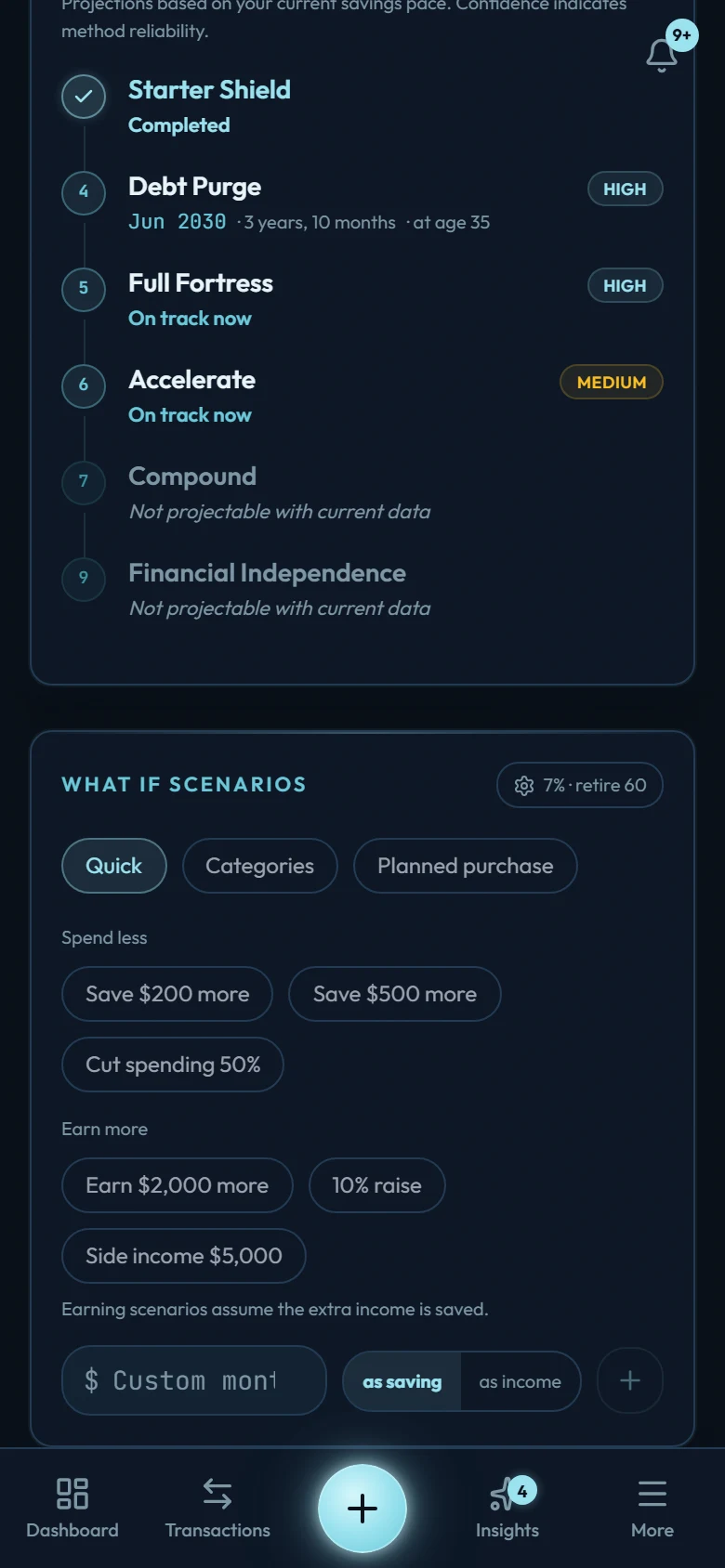
Months of runway is your savings you can reach quickly, divided by what a month actually costs you. It is one of the oldest numbers in personal finance and one of the least computed, because computing it requires knowing your real monthly spend, which loops straight back to the first two numbers. When you have it, a decision like "move now" or "wait one more month" stops being a feeling.
The direction of the line
The graduate who took 5 trips in a year, leased a car 3 months after graduating, and then could not sleep after seeing her savings chart in December had done nothing individually outrageous. Concerts, restaurants, a lease payment she could afford. What she had not seen was the direction. Each month her balance was a little lower than the month before, and a balance is a number that tells you where you are without telling you where you are going.
The couple who bought the break-even business are the same story at a larger scale. They took the seller's word for the cash flow and never asked for 12 months of books. Twelve months is the shortest window in which a direction becomes visible: the seasonal dip that is really a decline, the good month that is really a one-off. Whether the business is a corner shop or your own household, the direction matters more than the latest point on it.
Wealth Mutant is the app we built to put those 5 numbers in the room before the money leaves. You type in what you spend, in a few seconds, and it keeps the totals, the recurring line, the hours and the direction for you. No bank linking, and you buy it once.
Ready to take control?
Track your spending without linking your bank. One payment, yours for life.
Buy — $99 onceWhy the number has to arrive first
Nobody in those clips was short of intelligence. What they were short of is the thing psychologists call present bias, running unopposed: the immediate reward is concrete and the cost is abstract, so the reward wins by default. A number in the room is what makes the cost concrete. It does not need to argue, forbid or shame. It only needs to be true and visible at the same moment as the decision.
One clip features a life coach explaining that you never really lose money, you only gain things of value. We watched that one twice as well. It is a comforting way to think, and it works right up until somebody asks for the lifetime total. A record of your spending does not argue with the philosophy. It prints the figure and lets you decide whether you still believe it.
The app, doing the noticing for you
There is one more piece, and it is the one that makes the other 5 survive a busy month. You will not go looking for these numbers every week. Nobody does. So the app looks for you and speaks up when something has moved.
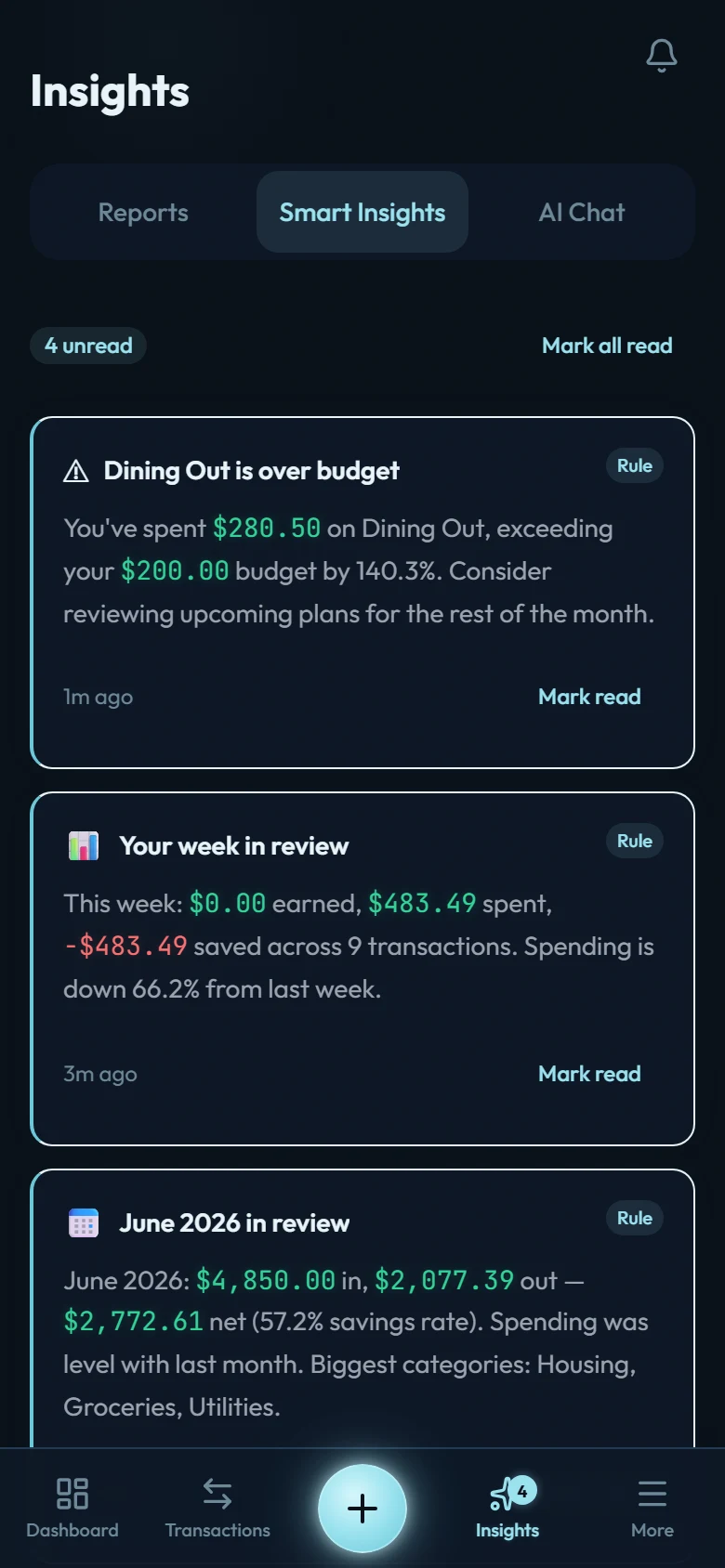
That is the difference between a tool you have to use and one that reaches you. The 17 people in the other video we watched, and the ones in this one, were not short of tools. They were short of anything that spoke up before the money left.
Putting the 5 numbers in the room
Every one of these numbers comes from the same raw material, which is a record of what you spend.
Pull the lifetime total on one habit
Pick the thing you suspect. Search your transactions for it and read the total across the last 12 months, then the total since you started recording. In Wealth Mutant, search and filters give you that figure in a few seconds, and in Reports each spending category's total also shows what it cost in hours of your life.
Read your recurring commitments as one number
List everything that charges you on a schedule and add it up as a monthly figure. Wealth Mutant keeps recurring rules in one place with their total, and raises an insight when that total changes.
Price your next big payment in hours
Before you sign anything with a monthly figure attached, convert it at your own earning rate. The Money Per Hour view does that conversion from your recorded income, and the What If builder prices a planned purchase in hours before you commit.
Count your months of runway
Savings you can reach quickly, divided by a real month of spending. The emergency-fund meter on the Mutation Path page shows it directly in months, and on a wide screen it sits on the dashboard too. The Defense arc of the Mutation Path is built around it: 1 month of your own expenses saved at Level 2, then 6 months at Level 5.
Look at the direction, not the balance
Once you have 3 or more recorded months, stop reading the number and start reading the direction. Net worth on the dashboard shows its change against last month, and Future Self carries the current direction 10, 20 and 30 years out, which is a far more honest picture than a balance ever gives.
What changes when the number is there
Decisions slow down in exactly one place: the moment before money leaves. Everywhere else life speeds up, because you stop carrying the low hum of not knowing. The delivery order still happens sometimes; it happens with the month's count in view. The subscription still gets added; the recurring total moves and you see it move. The car still gets bought, at a price you converted into hours and decided was worth it.
That is the difference we could not stop seeing between the people in those videos and the people who never end up in them. Both groups make ordinary decisions with ordinary willpower. One group has the number in the room.
Putting it there takes one evening. Take the tour to see the app these numbers live in — one payment, yours for life, and nothing connected to your bank.
If recording your spending is not a habit yet, that is the first step, and it is smaller than it sounds: The 30-Second Habit That Replaces a Budget. If the slow slide in the graduate's story felt familiar, Lifestyle Creep is about exactly that. And if 20 category limits are what put you off tracking in the first place, Flex Budgeting reduces the month to 3 buckets and one number to watch.
Common questions
What is the most common money mistake people regret?
Across public confessions the pattern is low, frequent spending that was never added up: food delivery, subscriptions, in-game purchases. The regret is rarely about one purchase and almost always about a lifetime or yearly total the person had never seen until someone else worked it out.
How do I find out how much I have spent on food delivery?
Search your bank or card statements for the merchant and add up 12 months, or ask the delivery app's support team for your lifetime total. If you record spending in an app such as Wealth Mutant, searching the merchant name returns the total across any window, and Reports shows each spending category's cost in hours of your life at your earning rate.
How many months of savings should I have before a big move?
Months of runway is your quickly reachable savings divided by your real monthly spending. Wealth Mutant's Mutation Path treats 1 month of expenses as the first cushion and 6 months as a full one. The number that matters is the one worked out from your own spending, not a rule of thumb.