
You can ask your card issuer for a credit limit increase online, in its app or by phone, and some issuers raise limits on their own. Whether asking means a hard credit check depends on the issuer. A higher limit lowers your credit utilization, as long as your balance stays about where it was.
A card issuer is the bank or company behind your card. Below: what issuers ask for, which checks leave a mark on your credit report, what a bigger limit does to your utilization (the share of your limit you are using) and when you can say no.
How do you ask for a credit limit increase?
Citi says many issuers take requests online, via their mobile app or over the phone, and Capital One's guide says to look for a "request credit limit increase" option in your issuer's online portal or to call the number on the back of your card.
Expect questions about money. Capital One says to have your income, employment status, and monthly mortgage or rent payment handy, and Citi lists income, credit score, existing expenses and recent credit applications.
The check is where issuers differ. Side by side, 2 issuers' own pages:
| Capital One (US) | HSBC (UK) | |
|---|---|---|
| What it looks at | Income, employment, rent or mortgage | Spending, missed payments, credit history, income |
| The check | Soft inquiry | Hard search |
| Before you can ask | Not a new account, no recent limit change | Card held over 6 months, no increase in the last 6 months |
Capital One says it only does a soft inquiry for credit limit increase requests, and HSBC says an application will leave a hard search on your credit records. The split is by issuer, not by country: Capital One adds that not all issuers conduct a hard inquiry, and in the UK Experian says your lender will run a hard or soft credit check. Ask yours which before you apply, as Discover advises.
Does a credit limit increase hurt your credit score?
It can, for a while, if the issuer runs a hard check. A hard check (a hard inquiry in the US, a hard search in the UK) means the issuer looks at your full credit report and the look is recorded. A soft check is not visible to other lenders.
The CFPB, which regulates consumer finance in the US, says hard inquiries impact your credit score because most credit scoring models look at how recently and how frequently you apply for credit, and soft inquiries will not affect your credit scores. A hard inquiry from a limit request could temporarily hurt your credit scores a little, says Experian, and FICO, which makes the FICO Score, says an inquiry can lower your score by a few points.
FICO only counts inquiries from the last 12 months, and in the UK Experian says most hard searches stay on your credit report for 12 months. Hard checks add up, so Capital One says to avoid requesting a credit limit increase more than once every few months.
Check a new limit against what you owe
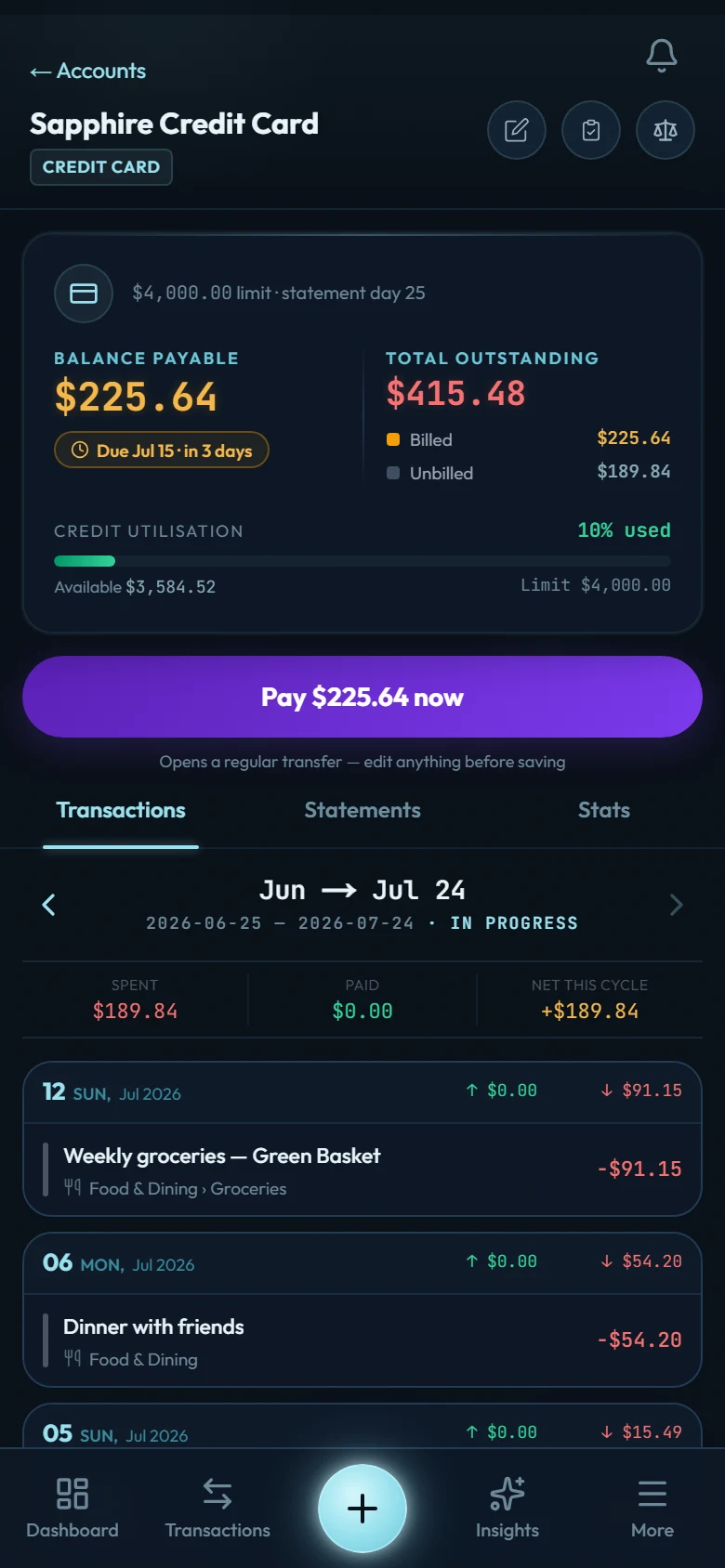
Wealth Mutant shows each card's limit, what you owe and how much of the limit you are using, on one page.
No card needed.
How does a credit limit increase change your utilization?
Utilization is your balance divided by your limit, so a higher limit lowers it as long as the balance does not grow in step. Capital One puts it this way: if you keep your spending about the same but increase your credit limit, your credit utilization ratio will go down. The credit utilization ratio guide has the formula and what counts as good.
Take a card with a 2,000 limit and a balance of 1,500: 1,500 ÷ 2,000 is 75%. Raise the limit to 3,000 with the balance unchanged and it is 50%. The amounts are in dollars, and any currency gives the same percentages.

The drop shrinks as the balance grows. Spend 750 of the extra 1,000 of limit and it is gone: the card is back at 75%, 2,250 ÷ 3,000.
Even at 50%, the card is well above the usual guides. Experian's rule of thumb is an overall ratio under 30%, and the CFPB says many experts recommend using less than 30 percent of your total credit limit. In the UK, Experian suggests keeping it below 25%. If this is your only card, 30% of its 3,000 limit is a balance of 900.
Wealth Mutant is the personal finance app we built for exactly this. Set a card's limit and its page shows the share you are using next to what you owe and what is still available, so after a raise you can see whether the new room is staying empty. You note each purchase yourself in a few seconds, a small daily habit that makes you notice, and no bank login is ever shared. It does not show or track credit scores. You pay for it once.
Watch the share used after a raise
A personal finance app for your cards, loans, budgets and net worth. Each card's page shows its limit, the share used and what is left.
Buy — $99 onceCan your issuer raise your limit without asking, and can you say no?
Some do. Capital One says lenders might increase your credit limit automatically if you're using your accounts responsibly. Citi says it can happen if you've recently started making more money and update your income.
Whether you get a say depends on where you live:
| Where | What the rule says |
|---|---|
| US | The CFPB says card companies generally can increase or decrease credit limits, and under its Regulation Z a raise needs no change-in-terms notice. Before any raise, asked for or not, the issuer must consider your ability to make the minimum payments, given your income or assets and current obligations (§ 1026.51). Under 21, a raise also needs your own ability to pay or the written agreement of a cosigner aged 21 or over (on a card opened with a cosigner, always the cosigner's). |
| UK | The FCA, the UK regulator, says an issuer must notify the customer of a proposed increase in the credit limit at least 30 days before it takes effect, unless you asked for it, or you agree to it and want it sooner. You can reduce or decline offers to increase the credit limit at any time, and opt out of offers. Once you have said you want no increases, or while you are at risk of financial difficulties, the issuer must not raise your limit or offer to (CONC 6.7.7R to 6.7.9R). |
| India | Banks shall not unilaterally upgrade credit cards and enhance credit limits, says the Reserve Bank of India in its credit card directions for commercial banks (para 34), which add that the cardholder's explicit consent must always be taken for any change in terms and conditions. |
| Canada | The issuer must get your permission in writing or verbally before increasing your credit limit, says the Financial Consumer Agency of Canada, and must confirm the change in writing by your next statement. |
Say no when the extra room would tempt you. Experian UK says to avoid higher credit limits if you are worried you might spend more than you can afford, and Capital One says it might be best to hold off if you plan to apply for other types of credit soon.
What to do once your limit goes up
Put the new limit wherever you track the card, then hold your balance where it was for a statement or two. The share of the limit you are using should fall; if it climbs back, you are spending the new room. If you do not know when your statements close, the credit card billing cycle calculator is free and lists your next 12 due dates and the statements they pay. In Wealth Mutant, edit the card to enter the new limit, and its page works out the share used against it.
Common questions
Does a credit limit increase hurt your credit score?
Only if the issuer runs a hard check, and then usually by a few points for a while. Capital One does a soft inquiry for limit requests; HSBC UK records a hard search.
Is a credit limit increase a good idea?
It can be, if your balance stays put: the same balance on a higher limit is a lower utilization. It is a poor idea if the extra room would tempt you to overspend.
How long does a credit limit increase take?
It depends on the issuer. Capital One says a request may be approved immediately but can take a few days, and Citi says it can take up to 30 days.
How often can you ask for a credit limit increase?
Issuers set their own gap. Capital One suggests no more than once every few months and says some lenders allow 1 request in 6 months. HSBC UK asks for 6 months since your last increase.
How much of an increase should you ask for?
An amount you can manage. Capital One calls the amount a personal decision and says to make sure you can manage the higher limit without overextending yourself. Experian UK says some lenders let you name a figure, with no guarantee you get it.
Your next step
Before you ask, find out whether your issuer's check is soft or hard, and decide what the extra room is for. What a good credit score is covers what moves a score, how many credit cards you should have covers the other way to add limit, and when your credit limit comes back covers how room returns after a payment. Take the tour to see the card page.