
What is a good credit score? On the FICO scale, which runs from 300 to 850, a good score is 670 to 739. Scores of 740 and up count as very good or better. Other countries and scoring companies use different scales, so the same number can be good in one place and only fair in another.
A credit score is a number that lenders use to judge how likely you are to repay what you borrow. It comes from your credit report, the record of your borrowing and repayments kept by credit bureaus (called credit reference agencies in the UK). Slightly different numbers from different sources are normal. Below are the published ranges for the US, UK, Canada and India, and how to check yours for free.
What is a good credit score in the US?
FICO says 90% of top lenders use FICO Scores. These are the bands it publishes:
| FICO band | Score | What FICO says it tells a lender |
|---|---|---|
| Exceptional | 800 and up | Well above average; an exceptionally low risk |
| Very good | 740 to 799 | Above average; dependable |
| Good | 670 to 739 | Near or slightly above average; most lenders call it good |
| Fair | 580 to 669 | Below average; many lenders still approve |
| Poor | Below 580 | Well below average; a possible risk |
Lenders draw their own lines: FICO says no single minimum score applies to all lenders, and each sets its own criteria.
The other model you will meet is VantageScore, created by the 3 big US bureaus. Its scale is also 300 to 850, but its good band is wider: Experian says a good VantageScore is 661 to 780. Banks and finance sites often give away VantageScore 3.0 free, so your free number may not be a FICO at all. The CFPB, the US consumer finance regulator, says it is normal to see scores that differ slightly, because they use different data and models, on different days.
What is a good credit score in the UK?
The UK has no single credit score, so what counts as good depends on the agency. On Experian's scale, which now runs from 0 to 1250, good is 861 to 1000. On Equifax's 0 to 1000 scale, good is 531 to 670.
The advice service Citizens Advice names the 3 credit reference agencies: Experian, Equifax and TransUnion. Equifax says there is no universal score, so you should not compare a number from one agency with another's.
Experian's old score ran from 0 to 999. Experian began a gradual rollout of the new one from autumn 2025. For now the new score is only available directly from Experian, so a banking app may still show you the old one. The Experian column below is for the new scale only:
| Band | Experian (0 to 1250) | Equifax (0 to 1000) |
|---|---|---|
| Excellent | 1121 to 1250 | 811 to 1000 |
| Very good | 1001 to 1120 | 671 to 810 |
| Good | 861 to 1000 | 531 to 670 |
| Fair | 641 to 860 | 439 to 530 |
| Low (Experian), poor (Equifax) | 0 to 640 | 0 to 438 |
TransUnion uses a scale of its own, so check a TransUnion number against TransUnion's chart. Each lender also scores you in its own way.
Keep every card's due date in view
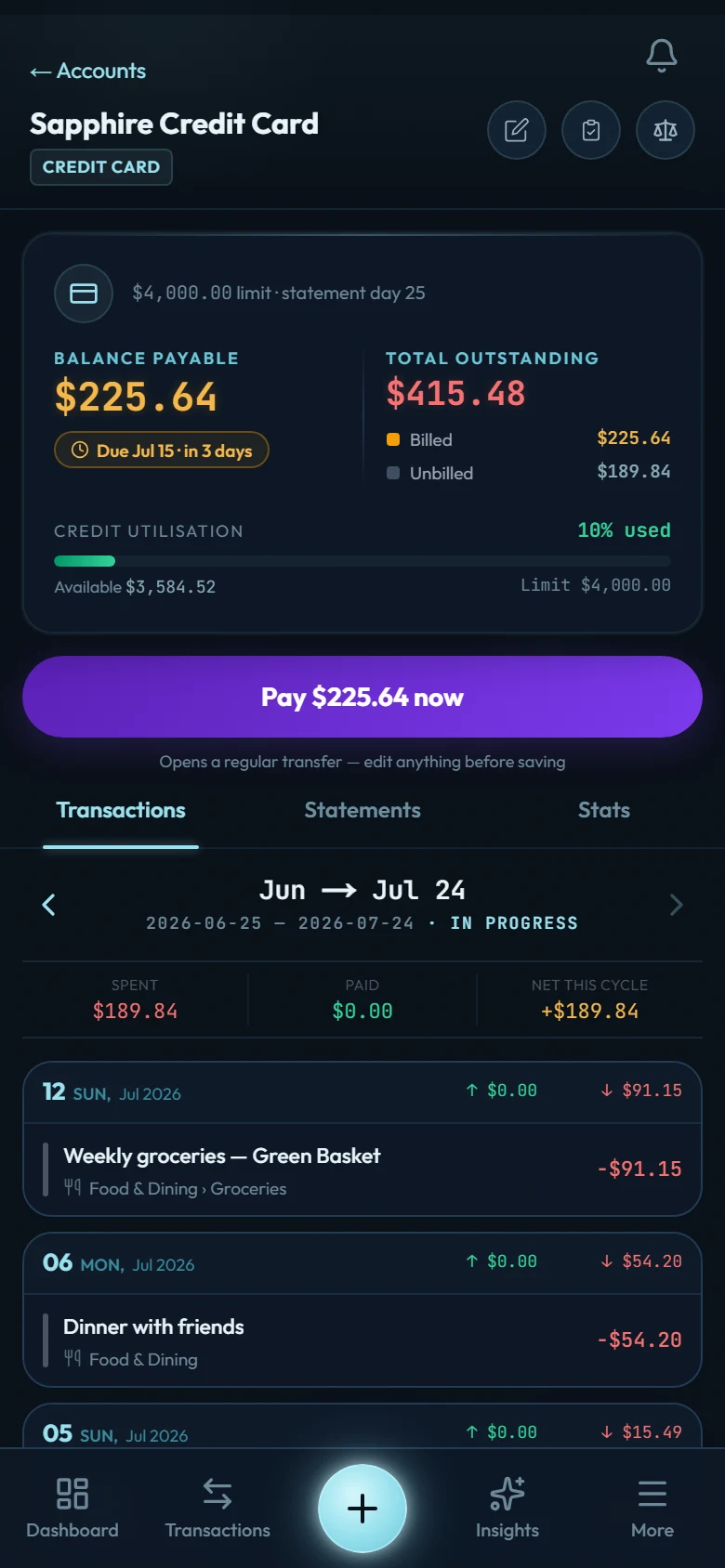
Add each card's statement day and due day, and Wealth Mutant shows what is billed and when it is due.
No card needed.
What is a good credit score in Canada and India?
In Canada, the federal regulator, the Financial Consumer Agency of Canada (FCAC), says scores usually range from 300 to 900, and the 2 main bureaus are Equifax and TransUnion. In India, the Reserve Bank of India (RBI) registers 4 bureaus: TransUnion CIBIL, Equifax, Experian and CRIF High Mark. Experian India and CRIF High Mark both say their scores run from 300 to 900. The bureaus set their own bands. These are 3 of them:
| Where, and whose bands | Bands |
|---|---|
| Canada, Equifax Canada | Excellent 760 and up, very good 725 to 759, good 660 to 724, poor generally below 560 |
| India, CRIF High Mark | Excellent 750 and up, good 650 to 749, fair 550 to 649, poor below 550 |
| India, Experian India | Generally good: above 750 |
Equifax Canada calls its bands general, because scoring models vary, and CRIF High Mark's page also calls a score above 700 generally good. Check the chart of the bureau that produced your number, whether that is CIBIL, TransUnion or another.

What moves your credit score?
FICO groups the data behind its score into 5 categories and publishes their weights:
| Category | Share of a FICO Score | What it looks at |
|---|---|---|
| Payment history | 35% | Whether you paid on time |
| Amounts owed | 30% | Your debt, and how much of your limit you use |
| Length of credit history | 15% | How long your accounts have been open |
| New credit | 10% | Recent applications and new accounts |
| Credit mix | 10% | Cards, loans, mortgages |
FICO adds that the weights may vary from person to person, and that income, age and where you live do not factor in. VantageScore ranks its factors by influence, and Experian says it rates payment history as extremely influential. Experian UK lists it first among what its score is based on, and FCAC says a Canadian score goes up when you pay bills on time and down when you miss payments.
Paying on time is something you can get right every month. FICO says your track record of payment tends to be the strongest predictor of whether you will pay your debts as agreed, which is why it gets 35%. A few late payments are not an automatic "score-killer", it adds: a good overall history can outweigh one or two late card payments.
A late payment does not stay forever. In the US it can be reported for up to 7 years, in the UK for 6 years, with its impact fading over that time, and in Canada for up to 6 years.
How much you owe comes second: FICO files the share of your limit you use under amounts owed. Our guide to the credit utilization ratio covers how it is measured and what counts as good.
Due dates and limits are easy to lose track of across several cards. Wealth Mutant is the personal finance app we built for exactly this. It does not show or track credit scores. It keeps each card's statement day and due day in front of you, shows how much of its limit is in use, and reminds you ahead of the due day. You note each purchase yourself in a few seconds, a small daily habit that makes you notice what is building up on a card, and no bank login is ever shared. You pay for it once.
Know when every card payment is due
One personal finance app for your cards, loans, budgets and net worth, with each card's bill and due date kept in view.
Buy — $99 onceHow do you pay on time, every month?
Put the due date where you will see it
It is on your statement or in your card's app, and it is the date to pay by, not the statement date. When to pay your credit card bill explains why.
Pay by that date, in full if you can
Statement balance vs current balance shows which number to pay, and why the minimum is a different thing.
Set a reminder or an automatic payment
Experian UK suggests reminders or Direct Debits so payments are less likely to be missed. Pay a few days early, in case a transfer is slow.
Lateness is treated differently by country. In India, the RBI lets a card company report a card as past due, or charge a late fee, only after it has been past due for more than 3 days, counted from the due date on your statement. Credit card payment after the due date explains the rule. In the US, Experian warns that even a single payment 30 days past due can hurt your credit scores. Either way, the due date is the safe line.
Not sure when your next payment is due?
Work out your next due date
Type the day of the month on your statement and how your due date is set. You get the next due date, how many days away it is, and how many days a purchase today has to pay.
If it falls on a weekend, you will see the weekday.
Working out your dates.
How do you check your credit score for free?
| Where | Your credit report | Your score |
|---|---|---|
| US | Free every week from all 3 bureaus, at the site named below | Often free from your card issuer or lender, or a nonprofit counselor |
| UK | A statutory report (your credit file, which an agency must give you free if you ask) from Equifax, Experian or TransUnion; Experian's carries no score | Free every month from an Equifax Basic or a free Experian account |
| Canada | Free online from Equifax and TransUnion | Equifax free in every province and territory; TransUnion free in Quebec and Ontario |
| India | 1 free report a year from each bureau, which Experian India says RBI guidelines entitle you to | Free with the report at Experian India |
Type the official address yourself (in the US, AnnualCreditReport.com): the CFPB and FCAC both warn about sites that claim to offer free reports.
What changes once you know your scale
You stop comparing numbers across scales. You find your band on its own chart, and the next step is the same everywhere: pay every bill by its due date, keep balances well under your limits, and read your report once a year for mistakes.
Common questions
Is 700 a good credit score?
In the US, yes: it is Good on FICO (670 to 739) and inside VantageScore's good band (661 to 780). In Canada it is Good on Equifax Canada's chart (660 to 724). In India it depends on the bureau: inside CRIF High Mark's good band (650 to 749), but below Experian India's good line of above 750. In the UK it depends on the agency: Fair on Experian's new 0 to 1250 scale, a band Experian also calls average, and Very good on Equifax's 0 to 1000 scale (671 to 810).
What credit score do I need to be approved?
There is no single minimum. FICO says each lender sets its own criteria, and Equifax UK adds that even a perfect score would not guarantee you are accepted for every loan.
Does checking my own score lower it?
No. In the US, Experian says checking your own credit won't lower your credit scores. FCAC says checking your own credit report or score does not affect your credit score, and Experian UK and CRIF High Mark say the same about their scores.
Your next step
Find your number, find the chart for the scale it came from, and write down the band. Then set each card up in Wealth Mutant with its statement day and due day, so the next payment is already on your screen, and take the tour to see the rest.